
Solar Myths We’ll Still Hear in 2026 (and Why They Won’t Go Away)
Solar energy has been around long enough now that, in theory, we should all be on the same page. Panels on rooftops are a familiar sight. Batteries are no longer futuristic add-ons. Rising energy prices have pushed self-generation into everyday conversation. And yet, despite all of this, we still hear the same questions, concerns and half-truths cropping up again and again.
That isn’t because people are behind the times. Energy is complex. Technology moves quickly. And outdated information has a habit of sticking around far longer than it should.
Rather than brushing those worries aside, we think it’s worth addressing them properly. So, here are some of the most common solar myths we still hear in 2026 — and why they continue to linger.
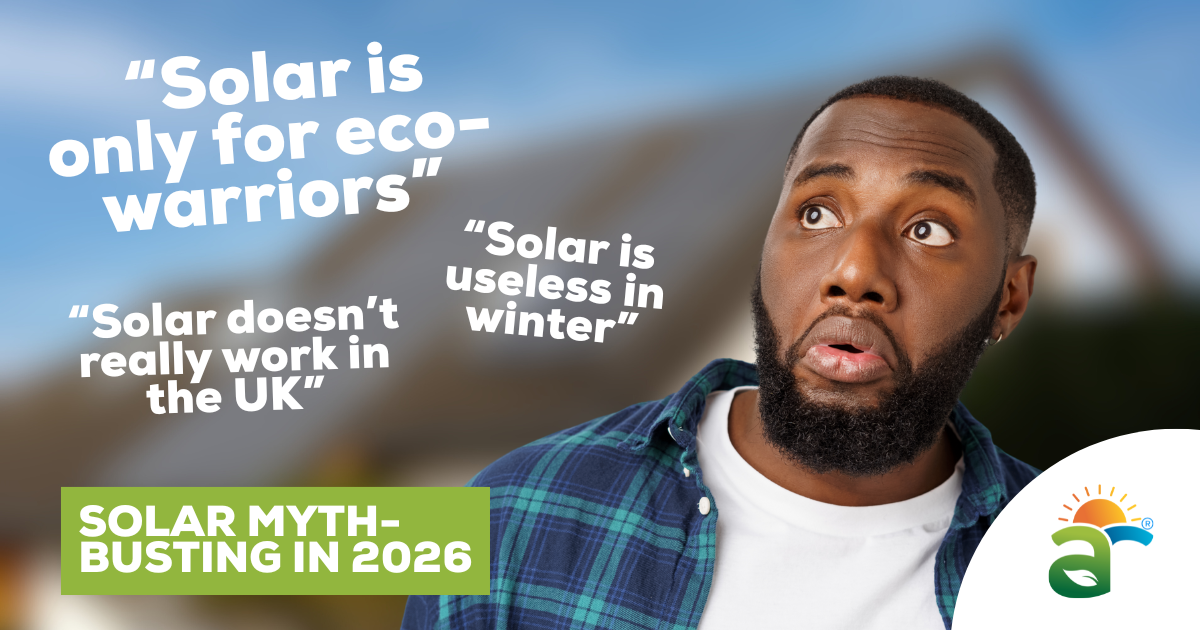
Myth 1: “Solar doesn’t really work in the UK”
This is one of the most persistent myths around solar.
Somewhere along the line, “we don’t get much sun” became shorthand for “solar won’t work here”. It’s an understandable assumption, but it misses how solar actually works.
Solar panels don’t rely on heat. They rely on daylight. Even on cloudy days, light still reaches your panels and electricity is still generated. In fact, panels often operate more efficiently in cooler temperatures than in extreme heat.
The UK might not resemble southern Europe, but it consistently produces enough solar energy to make domestic systems worthwhile. Countries with similar or less favourable climates have been successfully using solar for years.
This myth sticks around because people picture solar as something that needs blazing sunshine. In reality, it’s far more about consistency than intensity.
Myth 2: “Solar is useless in winter”
This concern comes up a lot — and it’s one we’re always open about.
Yes, solar generation is lower in winter. Days are shorter. The sun sits lower in the sky. Nobody should pretend otherwise.
But lower doesn’t mean zero.
Your panels don’t stop working once autumn arrives. They continue generating throughout the year, just at different levels. When paired with battery storage, that winter generation becomes even more useful, allowing you to store energy during daylight hours and use it later in the evening when demand is higher.
This myth persists because expectations are often set incorrectly. Solar isn’t about one strong season — it’s about balancing generation, storage and usage across the whole year.
Myth 3: “Solar panels will damage my roof”
This myth usually comes with a concerned glance upward.
The idea that panels automatically mean leaks, cracked tiles or long-term roof issues is one of the biggest emotional barriers to solar. In most cases, it comes from stories about poor installations rather than the technology itself.
A proper installation begins with a full roof survey. Fixings are designed to work with your roof structure, not against it. Tiles are lifted and replaced correctly, seals are used where they’re meant to be used, and everything is installed to last.
In many cases, panels can actually help protect the section of roof beneath them from long-term weather exposure.
This myth survives because negative stories travel faster than quiet success. The difference is never solar panels — it’s how they’re installed.
Myth 4: “It’s not worth it unless you’re home all day”
This is one of the most common assumptions we hear.
People often imagine solar only makes sense for households where someone is home all day running appliances. That used to be closer to the truth. It isn’t anymore.
Modern systems are designed around real-world routines. Battery storage allows excess daytime energy to be saved and used in the evenings when most households actually need it. Smart tariffs and export payments add further flexibility.
Even without a battery, solar can offset a surprising amount of background usage — fridges, freezers, routers and standby devices quietly drawing power throughout the day.
This myth lingers because people underestimate how much electricity their home uses, even when no one is there.
Myth 5: “Solar only makes sense if you’re staying forever”
We often hear this from people who like the idea of solar but aren’t sure it fits their longer-term plans.
There’s a belief that unless you’re staying in your home for decades, it isn’t worth considering. In reality, payback periods are far shorter than they once were, and buyers are increasingly comfortable with — and often attracted to — homes that already have solar installed.
Solar isn’t just about long-term savings. It’s about reducing bills now, increasing energy independence, and future-proofing your home in a changing energy market.
This myth sticks around because solar is still sometimes seen as a niche feature. In truth, it’s becoming part of what people expect from a modern home.
Myth 6: “The technology will be better next year, so I’ll wait”
On the surface, this feels sensible.
And it’s true — solar technology will continue to improve. Panels will become slightly more efficient, batteries smarter, and systems more refined.
But waiting for perfection often means missing out on years of savings in the meantime.
The biggest factors affecting what solar can save you aren’t small efficiency gains. They’re energy prices, household usage, and how long you’ve been generating your own electricity. Every year spent waiting is another year of bills you could have reduced.
This myth persists because we expect dramatic leaps in technology. Solar doesn’t tend to work that way. Progress is steady, not sudden.
Myth 7: “Solar is only for eco-warriors”
Once upon a time, solar carried a certain image. That image hasn’t fully caught up with reality.
Today, people choose solar for all sorts of reasons: lowering bills, protecting against rising costs, charging electric vehicles, or simply wanting more control over their energy.
The environmental benefits are real — but they’re no longer the only motivation. Solar has moved from ideology to everyday practicality.
This myth lingers because the narrative hasn’t quite caught up with how normal solar has become.
Why these myths keep coming back
Most of these myths don’t come from bad intentions. They come from uncertainty.
Energy is one of those subjects where people want to make the right decision. Nobody wants to feel rushed, misled or talked into something that isn’t right for them. As a result, doubts tend to hang around, reinforced by outdated articles, second-hand stories or well-meaning advice that no longer applies.
That’s completely understandable.
Our role isn’t to dismiss those concerns. It’s to replace them with clear, honest information — even when the answers aren’t flashy.
Straightforward renewables, done properly
At ASK Renewables, we’ve never believed in pressure or exaggerated promises. Solar works — but it works best when people understand what it can realistically do for their home.
If you recognise a few of these myths, you’re not alone. The important thing is knowing where to get advice you can trust.
No hype. No jargon. Just straightforward renewables, done properly — by a local team fitting systems on homes we drive past every day.
That’s how myths fade away. One honest conversation at a time.