
The 2026 Low Carbon Landscape: Why More Yorkshire Homes Than Ever Are Choosing Solar and Battery Storage
When people talk to us about choosing solar, the conversation often starts with bills. But it usually ends somewhere much bigger.
It ends with control.
The latest figures from MCS Certified show that 2025 was a record-breaking year for small-scale renewables across the UK. More than 369,000 certified renewable systems were installed in homes and small businesses. That’s roughly one installation every 90 seconds.
Of those, over 267,000 were solar PV systems. Battery storage installations also surged past 40,000 in a single year, nearly doubling previous records.
These aren’t abstract industry statistics. They represent hundreds of thousands of households making a conscious decision to do something different with their energy.
And that matters.
Solar Is No Longer “Early Adopter”
There was a time when solar felt experimental. Panels were expensive. Batteries were niche. Payback conversations were fuzzy. That’s not where we are anymore.
When installation numbers reach this level year after year, something shifts. Technology moves from curiosity to credibility, and really, the science hasn’t changed. Solar panels convert light into electricity using photovoltaic cells, generating clean power directly from daylight. Batteries store excess generation so it can be used later, typically during peak-rate periods. What has changed is accessibility.
Prices have stabilised. Product quality has improved. Monitoring apps are smarter. Time-of-use tariffs reward smart energy behaviour. And homeowners are increasingly aware that grid electricity prices are unlikely to become more predictable any time soon.
In short, the decision to go solar is no longer about being “green enough”. It’s about being prepared.
Why Battery Storage Is Growing So Quickly
One of the most interesting trends in the latest MCS data is the rapid growth of battery storage.
Solar panels generate electricity during the day. But most households use more electricity in the evening. That mismatch is where batteries step in. A properly sized battery allows you to:
- Store excess daytime generation
- Reduce peak-rate imports
- Optimise time-of-use tariffs
- Improve resilience
It also changes how a home feels.
Clients often tell us that once they have solar and battery storage installed, they start thinking differently about energy. They check their app. They understand when their home is importing or exporting. They see what’s happening in real time.
Energy becomes visible… and when something becomes visible, it becomes manageable.
What MCS Certification Actually Means
In a growing market, standards matter.
MCS certification isn’t a marketing badge. It’s a quality framework. It sets the standards installers must meet for system design, installation, commissioning and consumer protection.
For homeowners, it means:
- Your system has been designed properly
- Products meet recognised performance standards
- You have access to relevant warranties and protections
- You can access export tariffs where applicable
For installers, it means accountability.
At ASK Renewables, we’re proud to be MCS certified. Not because it sounds impressive, but because it reflects how we believe solar should be delivered – carefully, transparently and correctly.
Solar is a long-term asset. It deserves long-term thinking.
The Bigger Picture: Why This Momentum Matters
It’s easy to focus on individual installations. One house. One roof. One inverter.
But zoom out for a moment.
When 369,000 systems are installed in a single year, something structural is happening. Distributed generation (meaning power generated at thousands of individual properties) becomes a meaningful part of the national energy picture.
That reduces strain on centralised infrastructure. It improves grid flexibility. It supports decarbonisation targets. And it helps normalise smarter energy habits.
We’re in a transitional phase in UK energy.
Smart meters. Time-of-use tariffs. EV charging. Home batteries. Flexible export schemes.
The pieces are being assembled into a more dynamic system.
Solar and battery storage aren’t distant technologies sitting outside that transition. They’re becoming central to it.
From Industry Statistics to Real Homes
Statistics are impressive. But what we’re proud of isn’t a national figure.
We’re proud of the individual journeys behind it.
- The family who wanted protection from rising bills.
- The homeowner who works from home and wanted to power their office sustainably.
- The EV driver who wanted to charge more intelligently.
- The couple planning for retirement who wanted predictable energy costs.
Each installation is different. Each home is different. Each motivation is personal.
That’s why design matters. A solar and battery system shouldn’t be a generic package. It should reflect:
- Roof orientation and shading
- Household consumption patterns
- Future plans (EV, heat pump, extensions)
- Tariff structure
- Budget and return expectations
Done properly, solar becomes part of how a home functions – not just something mounted on top of it.
2026: What Should Homeowners Be Thinking About?
If the growth trend continues, 2026 will likely see further acceleration in both solar and battery adoption.
For homeowners considering their options, the key questions aren’t “Is solar popular?” The data answers that. The more important questions are:
- Is my roof suitable?
- How much electricity does my home actually use?
- Would battery storage improve my return?
- How do tariffs interact with generation and storage?
- Who is designing this system – and how carefully?
But outcomes still depend on design quality. That’s where experience matters.
Proud to Play Our Part
As an MCS certified installer, ASK Renewables is proud of the role we’ve played in helping customers move from rising bills to solar savings.
We’ve seen first-hand how confidence grows once a system is installed and performing as designed. We’ve seen how understanding energy use changes behaviour. And we’ve seen how solar and storage can provide both financial and environmental reassurance.
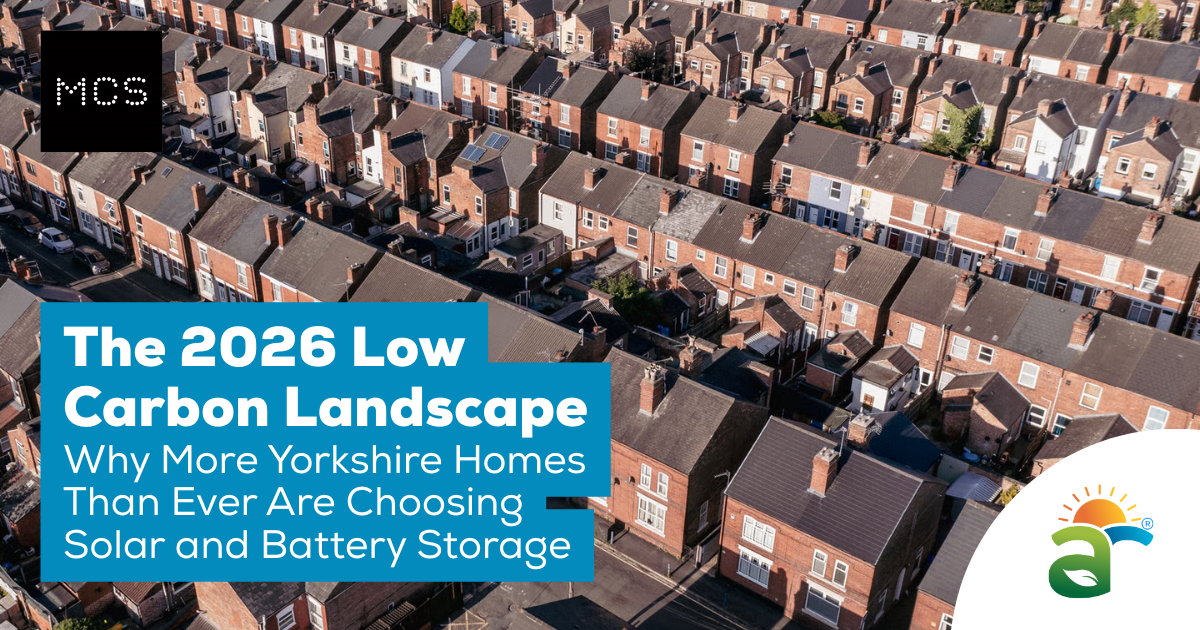
The 2026 low carbon landscape isn’t theoretical. It’s visible on rooftops across the UK.
If you’re exploring solar PV or battery storage for your home, our team is here to guide you through it clearly – from assessment to installation and beyond.
You can contact us here:
www.ask-renewables.co.uk/contact
The energy landscape is changing quickly. The question isn’t whether that change is happening. It’s how prepared you want your home to be for it.